The Importance of Caring
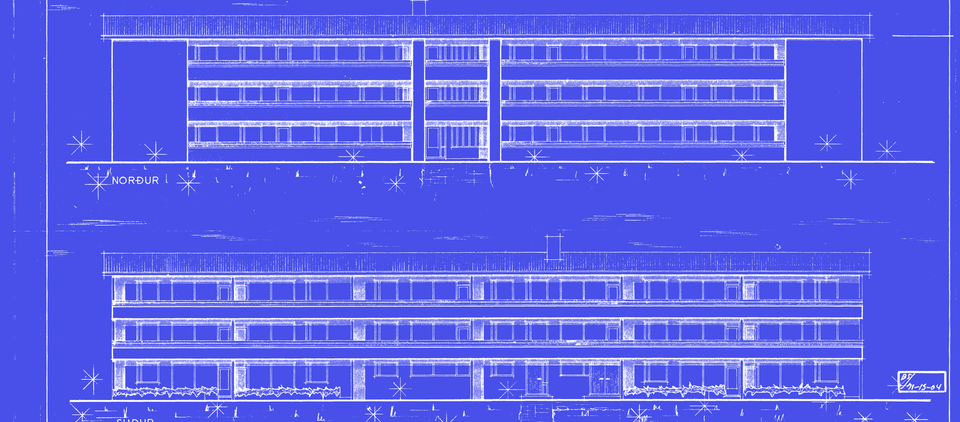
In the short story Jötunsteinn by Andri Snær Magnason, an architect ruminates on his most reviled creation. He was commissioned to design an apartment building for a contractor. After deeply internalizing the responsibility of designing the living space for several families, he poured his heart and soul into it, doing his best to make the space as good as he possibly could. Everything was thought out down to the smallest detail; the direction of the windows, the lighting, the outlet locations, the material design, optimizing the layout for social interaction, all the way down to the fishbone-pattern in the brickwork on the walkways outside.
However, when construction began the contractor immediately started cutting corners. Premade windows they got for cheap caused him to have to redesign the window layout to fit them, they made the stairs external because they deemed it easier to sell, they changed the direction of the windows, they reduce the number of outlets in the apartments and so on.
Many cost-effective changes that add up to eventually make the building terrible.
Then they reuse the same terrible design in other neighbourhoods where they don’t even fit in, and the architect makes every single concession along the way at the cost of his vision. He entered the field for the love of the game but ended up creating a monstrosity that he was ashamed of.
After this project, the architect gets commissioned to build a house for the contractor and his family, and they spare no expense. They obsess over every single detail of that house. Of course they would, because they are going to be living in it themselves. They don’t care how bad the living conditions they designed for others were, because that’s just for the poors. The architect realises this in the end, and after getting increasingly depressed and pushing his loved ones away, he snaps, sending a brick through the window of the contractor’s Range Rover.
On the surface, the story is a condemnation of the Icelandic construction industry, but it’s also an open critique of the current capitalist system on which it stands. Buildings, one of the fundamental structures of human civilization, are built quickly and shoddily before the company declares bankruptcy so they don’t have to worry about lawsuits down the line due to issues with their terrible craftsmanship. All they need to do is dump the company ID number and spin up a new one.
Little to no care is put into the actual practicalities of living there, and the vision of the architect, the artist who designed it, gets whittled away until what remains can only be described as “regulatorily sufficient”. All these decisions are made by someone who is completely removed from the actual building process and is functionally a middleman despite being the only one getting rich from the ordeal.
He hires people who will work for shit pay (often due to desperation) so he can maximise his own returns, and spending more money on the construction doesn’t mean the apartments sell for a higher price. In other words: the contractor exploits the labour of the working class to transfer wealth from another part of the working class into his own hands.
The story serves as a stark reminder of one of the most depressing facts of our current neoliberal hellscape: Specialization is not valued unless it directly benefits the market. Making society better doesn’t make a line go up. Helping others doesn’t fit neatly onto a spreadsheet. Making something that is loved and remembered for a long time doesn’t scale forever unless commodified.
Nothing is done just for its own sake. Everything must be frictionless, efficient, and synergistic, whatever that means. We create systems on top of systems to make problems impossible or illegal to fix. Yet, at the end of the day, the only reason we’re here at all is dirt and rain.
Caring is discouraged. You’re just working there because you have bills to pay, so you keep your head down and try to do as little as you can get away with without being fired. You know that there’s no upwards mobility anymore, so you don’t try. You’re not going to go above and beyond because it’s not awarded and it costs energy that you don’t have. Your boss keeps giving you vague, meaningless tasks because he’s not paid enough to care either. He just needs to look busy and occasionally talk to customers who need someone to take their misplaced anger out on. If that’s your situation, who’s to say it’s not most people’s? Did the customer support guy I was arguing with really have power to do anything about my problem or was he just another guy following the rules and trying to keep it together? Nowhere in the company is there a person whose job it is to make your day easier or make the workplace a better space to exist in. While scrolling you see an article about the company you work for. The CEO made over 100 million dollars last year and has a glamour piece in the New York Times.
The result is a society that feels lifeless. It’s frictionless but boring. It’s efficient but depressing. It’s synergistic but lacks all creativity. That’s the true cost of not caring. We lose track of what it means to be what we are: human. You know that moment near the end of the party, just before people call it a night? That’s where I sometimes feel we are as a society. We just keep the party going despite being tired because it’s still better than the alternative.
I firmly believe that real change is possible. But as Gramsci pointed out: the revolution needs to be first and foremost philosophical. The hegemonic ideas of today can be pushed aside for better ones, it just takes time. Change needs to be from the bottom up to be effective in the long run, and I do feel like the winds have been changing. It’s been a tough few years. A global pandemic, more pointless wars, fascists in the streets, the continued dismantling of human rights, increased surveillance, natural disasters caused by global warming, all the AI bullshit, whatever the fuck a “Clavicular” is. It can be overwhelming at times, but this too shall pass.
Here’s what I want you to do. Consider this your homework: Look up what flowers are native to your area, that part is very important. Then find seeds for them, usually at the gardening department at your local hardware store. Even better if you can get them from a local seller. Put those seeds in a container, a plastic bottle with a hole in the cap will do in a pinch. Then go around town sowing them in empty spaces that have soil. If you want to take this a step further, you may want to look up seed bombing. Even though it’s been a few years we’re still recovering from covid society-wide, but that’s a small thing you can do if you don’t already just to make your local area a bit livelier. That’s what we all need to do, because we can do great things if we care because, ultimately, society is us.
Member discussion